Chapter 1 of the Tao Te Ching contains incredible beauty and depth--especially considering it is only nine lines long. Read it slowly:
The Tao that can be spoken is not the eternal Tao
The name that can be named is not the eternal name
The nameless is the origin of Heaven and Earth
The named is the mother of myriad things
Thus, constantly without desire, one observes its essence
Constantly with desire, one observes its manifestations
These two emerge together but differ in name
The unity is said to be the mystery
Mystery of mysteries, the door to all wonders
God led me to this as I was floundering in the depths of what I call my "gender crisis." It's not that I felt transgender or something; I was just unhappy about the role of women and that I was doomed, as I felt at the time, to the feminine role. I hated femininity, and to be honest, I didn't really understand it, except that I felt it was inferior to masculinity. While I was struggling with the concept of gender and gender roles, that was when I started feeling the Holy Ghost nudge me to the text of the Tao Te Ching.
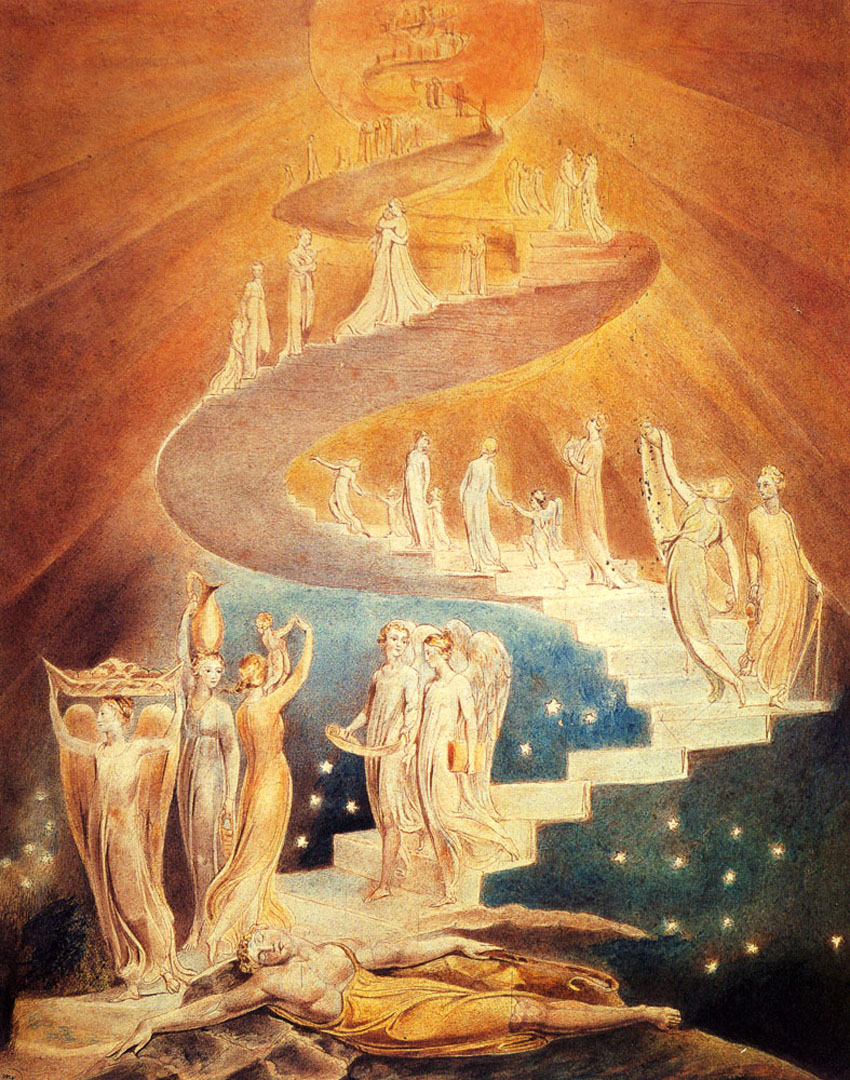
Temple Sealing
I love this first chapter because it gets to the root of the Gospel. Or rather, what we know to be the root of the Gospel thanks to modern prophets and the temple. According to this chapter, the unity of masculine and feminine essences--the nameless and the named; the origin of Heaven and Earth and the mother of all living--is the "mystery of mysteries, the door to all wonders." That's Tao Te Ching speak for the Mormon term "eternal marriage." In the temple you have the opportunity to be sealed to your spouse for time and all eternity, creating a unity of both masculine and feminine essences that holds the key to all creation.
Temple Sealing
 |
| Image here. |
I love this first chapter because it gets to the root of the Gospel. Or rather, what we know to be the root of the Gospel thanks to modern prophets and the temple. According to this chapter, the unity of masculine and feminine essences--the nameless and the named; the origin of Heaven and Earth and the mother of all living--is the "mystery of mysteries, the door to all wonders." That's Tao Te Ching speak for the Mormon term "eternal marriage." In the temple you have the opportunity to be sealed to your spouse for time and all eternity, creating a unity of both masculine and feminine essences that holds the key to all creation.
I love how it explains that the "two emerge together but differ in name," before explaining that their "unity is said to be a mystery/the mystery of mysteries, door to all wonders." This nine-line chapter can be interpreted so easily as a creation text, referring to God or to Adam and Eve.
Fascinatingly, as Adam and Eve, yang and yin, or masculine and feminine, have differing names--but, in unity, they share the same name. Genesis 5:2 and Moses 6:9 both state that "Male and female created he them; and blessed them, and called their name Adam" (emphasis mine). This unity is said to be a mystery.
Parallel Structure
The chapter starts with a beautiful example of parallel structure:
A: The Tao that can be spoken
B: is not the eternal Tao
A: The name that can be named
B: is not the eternal name
This two-line introduction serves to explain the idea that the Tao, the way of the universe, is ineffable--too great to be described in words. Additionally, the "name that can be named is not the eternal name." Later on in the chapter, names are brought up--as Christians and Mormons in particular, we know that names are very important! The Tao Te Ching teaches that there is only so much we as mortals can understand about the nature of the universal force (Tao) or the "name," which I interpret as being the feminine aspect of the universal force. I make this assumption based on the next few lines, which refer to the nameless being the origin of the universe and the named as the mother of all things.
Chiastic Presence
 |
| "The Tao is the way." Image here. |
Chiastic Presence
One of the great testimonies of the truthfulness of the Book of Mormon is the presence of chiastic structure throughout the text. (This Wikipedia page has a good example of the chiasmus in Mosiah 3:18, but the Book of Mormon includes gigantic chiasms and chiasms within chiasms--for example, the entirety of 3 Nephi 21 is a chiasm.)
There are multiple chiastic structures within this brief chapter. The most important one, to me, is made up of lines 3, 4, 5, and 6:
There are multiple chiastic structures within this brief chapter. The most important one, to me, is made up of lines 3, 4, 5, and 6:
A: The nameless is the origin of Heaven and Earth
B: The named is the mother of myriad thingsA: Constantly with desire, one observes its manifestations
B: Thus, constantly without desire, one observes its essence
The one constantly without desire, whose essence we observe, is the mother of myriad things. Yin. The one constantly with desire, whose manifestations we observe, is the origin of Heaven and Earth. Yang.
Lines 8-9 also contain a chiasm:
Lines 8-9 also contain a chiasm:
A: The unity
B: is said to be the mysteryA: the door to all wonders
B: Mystery of mysteries,
"The mystery, mystery of mysteries," is the center part of this chiasm. The center of a chiasm is its focal point. From the chiastic structure here, we can understand that the unity [of masculine and feminine, yang and yin] is the door to wall wonders, as well as the mystery of mysteries.
Notably, read this about the English word "mystery" (emphasis mine):
English “mystery,” on the other hand, comes, via Latin, from Greek mysterion — a secret religious ceremony attended only by initiates. Mysterion, in turn, derives from mystes, the officiating priest at such a ceremony, and is related to the verb mnein, to seal one’s eyes or lips — that is, not to reveal the contents of the mysterion to others.Now, obviously I haven't read the TTC in its original language. So I don't know if the word "mystery" here is an accurate translation of the literal meaning of the word in English. But if it is, it would indicate that the unity here is accomplished through sacred rites.
Temple sealing, anyone?
Implications for Yang and Yin
I mentioned earlier that God led me to this text while I was in the throes of a "gender crisis," basically hating everything feminine. As I read this, it broke my heart that the feminine is about essence while the masculine is about manifestation. At the time, I very much prized doing over being.
Later I realized that, as C. S. Lewis wrote,
 |
| Yin and yang. Public domain. |
we are dealing with male and female not merely as facts of nature but as the live and awful shadows of realities utterly beyond our control and largely beyond our direct knowledge. Or rather, we are not dealing with them but (as we shall soon learn if we meddle) they are dealing with us.Gender is a reality outside of our own minds. The Proclamation to the World on the Family really points this out. I realized that I could fight the fact that I am yin, feminine, by nature, and attempt to "do" instead of "be," to "manifest" instead of have an essence, but I would only fail. In the long term, as Lewis writes, we do not deal with male and female--they deal with us.
For me, realizing this meant I had to alter my worldview from one that was achievement-based to essence-based. Instead of "what have I done?" or "what will I do?" or "what am I doing?," I have had to learn to ask, "what am I?" and "who am I?"
Astoundingly, as I have made the shift from a yang-based view to a yin-based view of my own life, I have been rewarded with an increase in my spiritual gifts, an increase in my understanding of and testimony of the everlasting gospel of Jesus Christ, an increase in the peace and order of my home, an increase in the love of my husband and children, and in increase of joy in my heart. When I first made the shift, or first thought of making the shift, I wasn't sure what there would be in it for me. I was so focused on doing, finding joy in being seemed impossible.
It isn't.
Conclusion
The way of the universe is ineffable. Gender is eternal. The door to all wonders is the mystery of the unity of the genders: temple sealing?