Pages

Showing posts with label faith. Show all posts

Monday, January 26, 2015

Prepare: FOLLOW THE PROPHET!!

This has been on my mind so much recently!!

A lot of people have been feeling promptings to prepare--prepare food storage, water storage, clothing storage, all the rest. A lot of people have been feeling prompted to study the Biblical calendar--leading them to study things like the Shemitah and upcoming Jubilee, the Biblical blood moon tetrad, and so forth.

And a lot of people aren't feeling those things.

And that is okay.

The amazing thing about the Restored Gospel is that we have a prophet--a prophet like Moses or Noah or Peter or Abraham, who receives regular communication from the Lord about what the Church needs at any given time. No one has to know about the Hebrew calendar or something; no one even really needs to be prompted specifically to start getting their food storage together. The modern prophets have been urging us to prepare temporally since the Restoration. And we know that before anything gets really bad, the prophets will warn us and take care of us.

I guess the thing that's been on my mind is that temporal preparation is important--it truly is. But even more important is developing a testimony that is strong enough to follow the Prophet no matter what he tells us to do or when.

I was reading in the book The Gift of Giving Life, which is awesome and you should buy it and read it, and it talked about the pioneer women who birthed their children while crossing the plains on foot. This
is what Eliza R. Snow wrote about these women:
Let it be remembered that the mothers of these wilderness born babes were not savages accustomed to roam the forest and brave the storm and tempest--those who had never known the comforts and delicacies of civilization and refinement. They were not those who in the wilds of nature nursed their offspring amid reeds and rushes or in the recesses of rocky caverns. Most of them were born and educated in the eastern states... had gathered with the saints... had lovely homes decorated with flowers and enriched with choice fruit trees just beginning to yield plentifully. 
When I read that, I thought: what faith. Women just like me. Kind of. So they didn't have running water and indoor plumbing. They still gave up their outhouses in favor of peeing on the side of the trail. They still gave up their pretty houses in favor of living in the wilderness. They still gave up birthing their children in a warm home in favor of giving birth in the mud, in the rain, in the desert.

Because the prophet said to.

Do we have that kind of faith?

It doesn't matter if the prophet tells us to gather in the wilderness or not--what matters is that we have the faith to trust him if he does, or if he doesn't. Who knows. Maybe all these promptings to prepare are just to try our faith. Maybe nothing will happen for a year, a decade, a century or more. Who knows.

All I know is: the important thing is our faith. Do we have the faith to follow no matter what? That is the important thing.

Develop your faith! Follow the prophet!!

Monday, January 12, 2015

there are no incurable conditions.

I was reading a book the other day and it had the great thought: there are no incurable conditions, only incurable people.

Obviously, as an energy worker, I end up interacting with a lot of skeptics. I recently worked with a client who reached out in desperation and who flat-out asked, "Do I need to believe in this to work? Because let me be honest..."

I was happy to respond to her concern with the explanation that no belief is necessary for what I do to work; the only thing that is necessary is desire.

Which is to say, if you actively desire an energetic solution to fail on you, it will.

Actively desiring an energetic solution to your problems may not guarantee said solution, but it vastly improves its chances of success.

A person who does not wish to be healed is an incurable person. God will not heal us against our wishes. The crowning gift of God is agency--the ability to choose in accordance with our desires.

The role of beliefs

Even though desire is king here, belief still plays an important role. For example, take the person who wants to get well, but doesn't believe himself to be worthy of health. Or the person who wants to get well but believes health is impossible from them to achieve. There are any number of limiting beliefs that can affect a person's desires. For a desire to be effective, the person's belief systems don't necessarily need to support the desire, but they do need to at least get out of the way.

Image here.
Muscle testing is a simple way to identify limiting beliefs, and theta healing is a simple way to alter these belief programs on a subconscious level (circumventing the conscious mind). That sentence may make no sense at all, if you've never heard those terms before, but what it means is that if you have limiting beliefs out there that you don't know how to handle--say, the belief that you are not good enough, or the belief that life should be hard for you, or the belief that you deserve to be punished--there are answers for you that don't require decades of talk therapy. One energy healing session with the right practitioner can set your subconscious and conscious mind on a whole new route when it comes to beliefs like those.

And even if you think you have no bad subconscious programs running, well, you are probably wrong. Most people I work with, even very independent people who are horrified to hear it, have an "I am a victim" program running; even people who like themselves can have an "I am unworthy" program running. In this way, beliefs matter. But altering beliefs won't work if there isn't an accompanying desire to change them.

Faith, Hope, and Charity
1 Corinthians 13:13
13 And now abideth faith, hope, charity, these three; but the greatest of these is charity.

From here.
 Moroni 10:20
20 Wherefore, there must be faith; and if there must be faith there must also be hope; and if hope there must also be charity.
there must be

 Alma 7:24
24 And see that ye have faith, hope, and charity, and then ye will always abound in good works.

Doctrine and Covenants 18:19
19 And if you have not faith, hope, and charity, you can do nothing.

 Faith, hope, and charity: the triumvirate of righteous attributes. If charity is a principle of love (the pure love of Christ), and faith is a principle of action, hope is a principle of desire (can you believe it? There is literally no entry for Hope in the Bible Dictionary!). If you look up "hope" in the regular dictionary, since the Bible Dictionary apparently has no entry for it, you will see that hope is typically defined as a desire and expectation for something.

Hope is desire.

So when we talk about faith, hope, and charity, what we're really talking about is belief-to-action, desire, and love. You have to love yourself enough to have enough hope or desire for your future to act.

So where does incurability come in?

Incurability comes in where there is a lack of faith, hope, or charity, involving the illness. When a person doesn't love themselves enough to feel worthy to get well; when a person doesn't believe they can get well; when a person doesn't desire to get well.

Not wanting to get well actually comes into play a lot.

Consider the man who is collecting disability payments--if he gets well, he loses his livelihood. I have read accounts of people who have been healed through energy healing and then chosen to revert to previous states of dis-ease, for the sake of collecting a government paycheck.

People can desire illness more than health when:
- there is a financial or otherwise material benefit to remaining unwell
- it gives them the attention they crave from those around them
- they would rather blame an illness than take responsibility for their decisions
- they fear the responsibilities that would come with health
- they're afraid getting well too soon will lead to assumptions of them having made it all up
- they don't want to change their lifestyles as health would require
- the illness fills a need in any way
Image here.
Truly, there are any number of reasons why a person would consciously or subconsciously desire illness more than they desire health at any given time. And while I'm referring to "illness," really this could refer to anything that causes problems in a person's life, including a bad job or unemployment or an addiction or whatever. Faith, hope, and charity all intersect in those cases too, and hope matters far more than most people may necessarily think.

Remedy?

As far as I can tell, there is no real remedy for the person who doesn't want to be healed. That's what makes them incurable. The only remedy is their own choice to change. The most we can do is pray for them.

If they have a desire to have a desire to be healed, that is also something you can work with. It's one of those "help thou mine unbelief" things.

I work a lot with addicts, and this lack of desire, this hopelessness in reference to recovery, is extremely common. For whatever reason, addicts desire addiction more than they desire recovery. As with all illnesses, until there is a true desire to heal, a hope for healing, health and recovery will likely prove elusive.

The only remedy for an incurable person is a shift in desire.

I'll be writing more about how to shift desires in a future post.

Conclusion

There are no incurable conditions; only incurable people. God never heals against a person's will, so if a person desires not to heal, God will respect that desire. An incurable person can be made curable through a shift in desire.


Monday, November 3, 2014

Prepare your spirit

The most important part of emergency preparedness is spiritual.

Sermon on the Mount. Public domain.
We know this from the scriptures, but I was reminded of it during my first time checking in with the energy field of the Ebola virus. When I discovered that a belief blocking immunity to Ebola was "[Survival] is worse than death," I had the most sickening feeling to my body and my spirit as I felt what it would feel like to watch everyone around you die gruesome deaths. And I remembered Revelation 9:6:
6 And in those days shall men seek death, and shall not find it; and shall desire to die, and death shall flee from them.
That is how I felt as I experienced what it feels like to live when everyone you love has died horrific deaths. I realized: dying gracefully would require a huge amount of faith, but so would survival.

If society ever does fall apart, the most important thing will be spiritual preparedness--faith that is strong enough to sustain a person no matter what. Faith to sustain a person in death, or in a life that could be more miserable than death without the hope that comes from faith in Jesus Christ.
So how does one build the kind of faith that can sustain in times of "great tribulation, such as was not since the beginning of the world to this time, no, nor ever shall be" (Matthew 24:21)?

The Bible Dictionary defines faith:

Faith is to hope for things which are not seen, but which are true (Heb. 11:1; Alma 32:21), and must be centered in Jesus Christ in order to produce salvation. To have faith is to have confidence in something or someone. The Lord has revealed Himself and His perfect character, possessing in their fulness all the attributes of love, knowledge, justice, mercy, unchangeableness, power, and every other needful thing, so as to enable the mind of man to place confidence in Him without reservation. Faith is kindled by hearing the testimony of those who have faith (Rom. 10:14–17). Miracles do not produce faith, but strong faith is developed by obedience to the gospel of Jesus Christ; in other words, faith comes by righteousness, although miracles often confirm one’s faith.
The entry goes on to further explain that while faith is a gift, it has to be sought after and cultured in order to grow into a strong tree.

Planting the seed

The seed can grow into a tree. Image here.
Faith is often compared to a seed, as in the metaphor above. How do we obtain a seed of faith?

As the Bible Dictionary explained, we have to "hear the testimony of those who have faith." That's why LDS congregations have "testimony meeting" once a month, where members are invited to come up and share their witnesses of Christ's divinity, along with testimonies of other gospel principles, such as charity or tithing. Hearing the testimony of another person is how the seed of faith is planted, and sharing a testimony helps it grow.
An easy way to hear the testimony of people who have real faith is to read the scriptures. The Holy Bible has been inspiring faith in millions, for hundreds of years. Reading the words of Christ as transcribed by people who had faith in Him and personally knew Him is an incredible way to build faith.

The Book of Mormon also contains the words of Jesus Christ--or at least it purports to. The book comes with a promise that is very relevant to this discussion of faith, and this promise is found in Moroni 10:3-5:

3 Behold, I would exhort you that when ye shall read these things, if it be wisdom in God that ye should read them, that ye would remember how merciful the Lord hath been unto the children of men, from the creation of Adam even down until the time that ye shall receive these things, and ponder it in your hearts. 
4 And when ye shall receive these things, I would exhort you that ye would ask God, the Eternal Father, in the name of Christ, if these things are not true; and if ye shall ask with a sincere heart, with real intent, having faith in Christ, he will manifest the truth of it unto you, by the power of the Holy Ghost. 
5 And by the power of the Holy Ghost ye may know the truth of all things.
The scriptures. From lds.org.
The promise is that if you can muster enough faith to A) read the Book of Mormon, B) remember and ponder God's mercy towards the children of men, C) ask of God to know if these things are true or not true, with a sincere heart and real intent and faith in Christ, He will manifest the truth of it to you by the power of the Holy Spirit.

In other words, by following a very simple recipe, a very simple set of instructions, you can actually receive a divine witness as to whether or not the book is true or not.

Reading the book is an act of faith. Asking God about the truthfulness of the book with real intent--meaning, willing to change your life depending on the answer you get--is another act of faith. And then receiving the witness of truth strengthens your faith. It's like a giant cycle of faith-building.

If you don't have any faith, I recommend trying out the test. Worst case scenario, you waste five hours reading a book. Best case scenario, your faith in Jesus Christ strengthens incredibly and your life changes forever for the better.

If you already have faith in Jesus Christ but haven't read the Book of Mormon, the same goes for you: worst case scenario, you learn a little bit more about what other people believe about Jesus. Best case scenario, you feel like you understand the Gospel better than ever and feel a deeper-than-ever

Growing faith
relationship with Jesus.

Faith grows through exercise. Exercises of faith include but are not limited to:
- Daily scripture reading: exercising faith that studying God's word will benefit your life.
- Daily heartfelt prayer: exercising faith that God listens to and hears you, and cares.
- Service with a loving heart: exercising faith that God blesses those who bless His other children.
- Paying tithing: exercising faith that when we sacrifice a tenth of our material increase, God rewards us with more than what we sacrificed.
- Storing extra food and water: exercising faith that God inspired modern prophets who counseled this.
- Getting out of debt: once again exercising faith in God's prophets who have counseled this.
Bigger exercises of faith might be to turn your fertility over to God, trusting that He won't allow a pregnancy at the wrong time for you or your family, or to trust that all the things that don't make sense that pop into your mind are true. Exercising faith like this actually strengthens your faith so that you can exercise more faith.

The Bible has a great treatise on faith in Hebrews 11, and the Book of Mormon has a great one in Ether 12. The Bible Dictionary, as well as these scripture chapters, teaches that with enough faith, one can heal, command the elements, and do basically anything as long as it aligns with God's will. As Jesus said, faith as a mustard seed can move a mountain.

I don't think He was being metaphorical. Faith is the power to literally move literal mountains.

Conclusion

Growing faith is one of the most important things we can do to prepare for anything. Faith in an ultimately just yet loving and merciful God gives us the strength to forgive others and the world for the wrongs we suffer; it gives us the strength to let go of the outcome and trust that He has everything under control, even if we don't. Faith is what will give us the strength to die with grace or live despite horrors.  Building up a food storage or making other survival plans will be futile without a sufficient storage of faith in God and Jesus Christ that can weather the storms of anything the world has to throw at us. 

Wednesday, September 3, 2014

Jacob's Ladder and dreams as reality

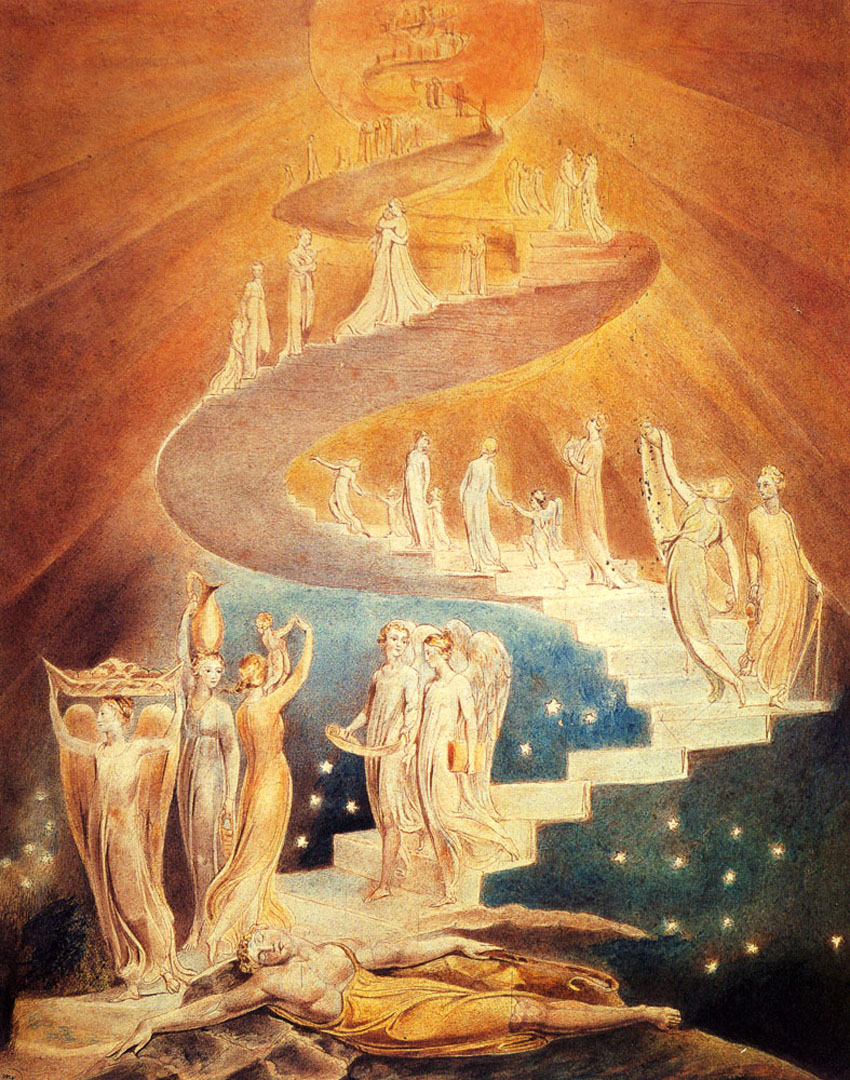
My mother teaches Sunday school for the youth in our ward, and she's been teaching them a lot about Abraham, Isaac, and Jacob lately. She found a fascinating talk on LDS.org that refers to a fact that I guess I'd known but never really considered very deeply. Mainly, that Jacob, father of the Twelve Tribes of Israel, received his temple covenants in a dream.
Image here

The famous dream, called Jacob's Ladder, which is also the premise of the hymn Nearer My God to Thee on page 100 of the 1985 edition of the LDS hymnbook, was a temple experience. 

Examine this excerpt from the talk:

With this blessing fresh in his mind, Jacob left Beersheba on a journey that would ultimately take many years. Perhaps on the first leg of his travels, he pondered the covenants and promises extended to Abraham and his posterity by the Lord. When Jacob reached the place he would later name Bethel, he settled down to spend the night. While he was asleep a marvelous vision was opened to him. [...]
When Jacob arose in the morning, he sanctified the site of his vision with anointing oil and vowed, or covenanted, to live in complete harmony with God’s will. He concluded his affirmation with a promise to tithe all that he would come to possess (see Gen. 28:18–22).
The talk goes on to address six points illuminated by Jacob's dream. Here is the last of those points, emphasis mine:

Sixth—and this point ties the other five points together—Jacob had a templelike experience on the occasion of this vision. 
This phrase is repeated throughout the Ensign article--that Jacob's vision was a templelike experience. The writer goes on to quote Elder Marion G. Romney, and then add some more insight (emphasis mine, again):
Image here
Temples are to us all what Bethel was to Jacob. Even more, they are also the gates to heaven for all of our unendowed kindred dead. We should all do our duty in bringing our loved ones through them.” 2 
Thanks to Elder Romney’s insight, Latter-day Saints can more fully understand that their temple experiences are really the experiences of every Saint in every dispensation. Jacob’s faithfulness was rewarded with an opportunity to make eternal temple covenants. But the great promises and blessings proffered to Jacob in Bethel at that time were conditional rather than absolute. Nowhere does the text say they were sealed or ratified with surety at this point, as is sometimes supposed; Jacob would have a long time to prove his loyalty and secure for himself the unconditional guarantee of all the terms of the covenant. Neither does the text say that Jacob’s dealings with the Lord at that time constituted the ultimate theophany, or revelation of God, which the scriptures promise to the faithful. This would come later, after years of his righteousness. But Jacob undoubtedly came away from Bethel understanding the order of heaven, the possibilities for exaltation, and the promises of the Abrahamic covenant if he proved faithful. So it is with all of us.
The whole article is great, but the main point I wanted to discuss on this blog is the potential reality of dreams. Is this to say that all dreams are somehow prophetic in nature, or that everything we do or say in dreams is somehow true or spiritually binding? I don't think so. But it remains that at least for one man, Jacob, his temple covenants were literally made in a dream, while he was literally asleep.

Implications

The obvious implication here is that dreams can be true. True things can happen in dreams.

True things can happen to us when we are not awake.

And these things can affect us permanently. You can make covenants in your dreams. You can change your life in a dream.

Another implication is the importance of sleep. You can't have significant dreams if you aren't sleeping! It is so important for the health of both body and spirit to get enough sleep.

Another thing I like to think about in the context of Jacob's dream is how important faith is. It can be so easy to look back at spiritual experiences, particularly those experienced in a less-than-fully-conscious mental state, and doubt them or not take them seriously. Another person might have experienced a dream like Jacob's and woken up to tell himself it was just a dream. One of the greatest things I have done in my life is decide to always trust: if there's ever a question about whether or not what I experienced was true or "just in my head," I decide to trust that it was true. This has led to some startling spiritual experiences that I never would have ever believed possible a year ago, had they not happened to me.

Lucid Dreaming

What does this mean in the context of lucid dreaming?

Jacob's dream. Image here.
Well, first, I wonder if Jacob's dream would be appropriately labeled as a lucid dream. I do believe it would count as one, it's just that people typically wouldn't call it that because it was spiritual in nature. We would prefer to call it revelation rather than a lucid dream, even though in reality neither term ought to diminish the other. Why can't a person receive revelation in a lucid dream? The dream is just a vehicle for another aspect of reality to present itself.

Maybe I'm just projecting my own beliefs onto this issue--maybe it's just me that feels kind of weird labeling something like Jacob's dream or Lehi's dream as a lucid dream. But that would be how such a dream would be categorized, as far as I can tell.

Are you looking for more spiritual connections in your dreams? Developing your daily awareness will help. I just read a book where it talked about how frequent lucid dreamers will touch every doorframe they pass through and ask themselves, "Am I dreaming?" This practice prepares them to ask that question in their dreams--but just as importantly, it wakes up their conscious waking mind to reality. So much of the day we can spend almost hypnotized, just doing things out of habit or by rote. Ask yourself, "Am I dreaming?" as you go about the day. I did it yesterday. Although I've felt much more aware of my self during the day, generally speaking, the practice did continually bring me back into the moment.

Image here.
I'm not a lucid dreamer, typically--I can't think of a lucid dream I've had, so I'm hardly an expert on this stuff. But dreams are clearly a vehicle for spiritual communication for many people. And it would seem that scriptures and modern prophetic interpretation both agree that the things that happen in dreams can be very real, and have very real effects on the people who experience them. For Jacob, his dream directly related to his eternal salvation.

Perhaps taking up a routine encouraging lucid dreaming can help you in your journey toward enlightenment. Something to consider.

Conclusion

The imaginative state of dreams can be a powerful vehicle for spiritual information--and not just information, but even things so serious and binding as sacred, eternal covenants. Getting enough sleep is crucial to physical health (our bodies are temples!) and spiritual health (can't have spiritual dreams if you don't sleep!). It may be wise to consider dreams as being more than just the venting of a tired mind at the end of the day--perhaps at times they consist of a reality greater than we may suspect.

Saturday, August 16, 2014

walking your divine path

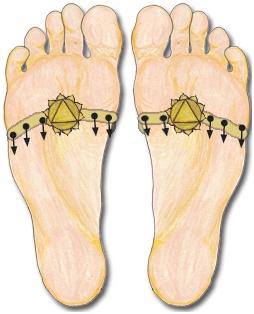
In the recent past, I reached out to a mentor of mine to ask about a particular spiritual gift I noticed on her energy. When she wrote back, she noted that when she looked into my energy, that my foot chakras were open and glowing gold--a sign to her that I am walking on my divine path.
Foot chakras. Image here.

This was such an incredible validation to me, but I didn't need her to tell me to know it was true. For some time now--maybe a few months--I've felt very strongly that I am doing exactly what I'm supposed to be doing. Every day has felt very "led." Even the hard stuff isn't hard--at least, most of the time!

So the question comes: how do you prepare to live your divine path? People I work with ask me that and it's something I've been pondering a lot.

This is what I've concluded: You begin to walk your divine path only after you agree to stop walking your path.

When you can live by faith in the divine, instead of faith in yourself, you begin to walk your divine path.

Personal Experience

My life changed radically after God told me in no uncertain terms to uproot everything about myself that I liked. At first I fought it, but then I agreed to do it because He said so, but at the time I wasn't sure what would happen, or even what would be left of me after the changes took place.

As it turned out, uprooting my own flaws, to the extent that I did, opened up space in myself for the Holy Spirit to work.

I had always considered myself a spiritual person, and I was, but I think what had happened was I had fallen into the rut of feeling spiritual because I had lots of spiritual experiences, rather than living by the Spirit or allowing those spiritual experiences to change me.

Spiritual rebirth. Image here.
How many times have you come home from church feeling spiritually reborn? Let me put it this way: I'd had that feeling maybe a few times prior to 2014, but in the past six months, I've felt it over and over again. I may just be slow or something--we all know that we're supposed to feel that way every week, and for all I know everyone else does--but for me it took a radical change of heart and change of perspective in order to transition from merely feeling the Spirit at church and in my life to living by the Spirit. And let's be real: I'm not 100% living by the Spirit. I still have a ways to go to get there. But I am way closer to that reality now than I was before my radical change of heart.

Living by Faith

How does one begin to live by faith?


That's a trick question. Everyone already DOES live by faith! The real question is, where do you put your faith? Is it in God, or in man?

Is it in God, or in yourself?

Is it in God, or in your boss, or in your spouse, or in your business, or in your church leaders?

Is it in God, or in consensus reality?

Abinadi. Image here.
Do you have faith in prayer, or in God? Because sometimes God doesn't answer prayers the way we want. Faith in anything except God is doomed for failure.

But faith in God will always lead to success--if not in this life, than the next. (I always think of Abinadi here. Did he have a great ending on Earth? No, unless getting burned at the stake sounds like your idea of a great way to go. But he accomplished his life mission, walked his divine path, continues to inspire millions of people today and surely has a huge reward in store in heaven. He just goes to show that walking your divine path may not be easy at all--but it is still worth it.)

So how does one live by faith in God?

The first step has to be clearing out the internal obstacles to faith. In my case, I had to start with pride, and then doubt. I had a lot of pride in a lot of things. At the time, I didn't realize that's what it was, but looking back on it, what God was telling me to change was my pride. It just so happened that my pride had led me to a certain type of lifestyle that was not conducive to living by faith. It wasn't a bad lifestyle, necessarily; I was still worthy of the Holy Spirit and felt the Spirit on a daily basis. It was just that I hadn't been allowing that spirit to work in me the way I should have been. When I uprooted my pride and changed my lifestyle to match, a whole new level of revelation, perception, and lifestyle just kind of happened.

After that, the next step was doubt: my biggest life changes came after I told God that from now on, I was going to embrace not just the things that I knew were promptings of the Holy Spirit, but also all things that seemed to occur to me from a non-logical, non-rational place. I told God: "I'm just going to embrace everything that comes into my head, especially if it doesn't make sense--so DON'T LET ME THINK ANYTHING WRONG!!" :o)  As soon as I made that commitment, as soon as both pride and doubt were gone, things were exceptionally different for me.

Feeling Crazy
  
Here's the thing about walking a divine path:

A lot of times, it feels crazy.

How do you think Abinadi felt when he was told to preach to the men who wanted to kill him?

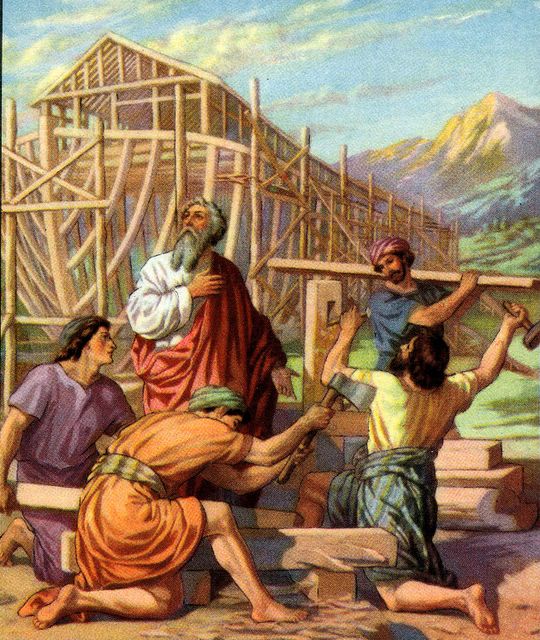
Noah building the ark. Image here.
How do you think Lehi felt when he was told to leave all his riches and his business and friends behind in Jerusalem and travel in the wilderness?

How did Moses feel while wandering in the desert for 40 years?

How did Noah feel while constructing the Ark?

How did Sarah feel when she was told she'd conceive a son in her old age?

How did Joseph feel while he was interpreting dreams from his prison cell?

I bet that they had moments where they felt a little bit crazy.

How else are you supposed to feel? When you spend decades building an Ark that's supposed to house literally one of every single species on the Earth, because of a flood that no one believes will come?

How are you supposed to feel when your wife and sons think you're crazy for abandoning your wealth in the holy city in favor of wandering the desert in search of a promised land?

How are you supposed to feel when you're way past child-bearing but God makes you the promise of children?

Well, you're supposed to feel peace and faith. But people mock, and don't understand, and so I bet that from time to time, even the prophets and their wives felt weary and wondered at the things they were required to do. I bet they felt the weight of their friends' and neighbors' and family members' judgment. But they kept walking.

Conclusion

Lehi's dream. Image here.
Walking your divine path may not be easy, but it is simple. I highly recommend reading the account of Lehi's dream and Nephi's interpretation of it to more fully understand--but it comes down to listening to and obeying God's word, even and especially when those around start to mock.

God rarely tells us to do things that are easy. His goal for us is growth, and as they say, there is no growth in the comfort zone and no comfort in the growth zone! Following God with all of your heart lands you firmly in the growth zone--which can seem uncomfortable at first. But God is in the growth zone and He is there to comfort us if we trust Him.

Trust Him!

Walk your divine path!

I love this rendition of Lehi's dream. Image here.


Saturday, June 28, 2014

growing faith to heal

Emotional healing is both simple and difficult. Simple because it's easy to understand. Forgiveness. Repentance. Turning your burdens over to a higher power. These are things that are easy to conceptualize... but are often difficult to implement. Why is this?

Why is it so difficult to forgive? To repent? To let go of the burdens we grip with whitened knuckles? Why do we hold onto our grudges, our gripes, our pains, our complaints?

I believe it comes down to faith. "Letting go and letting God" takes an enormous amount of faith.

How do we develop enough faith to let go of the darkness in our hearts? How do we develop the faith necessary to trust that when we let go, something better will come into its place?

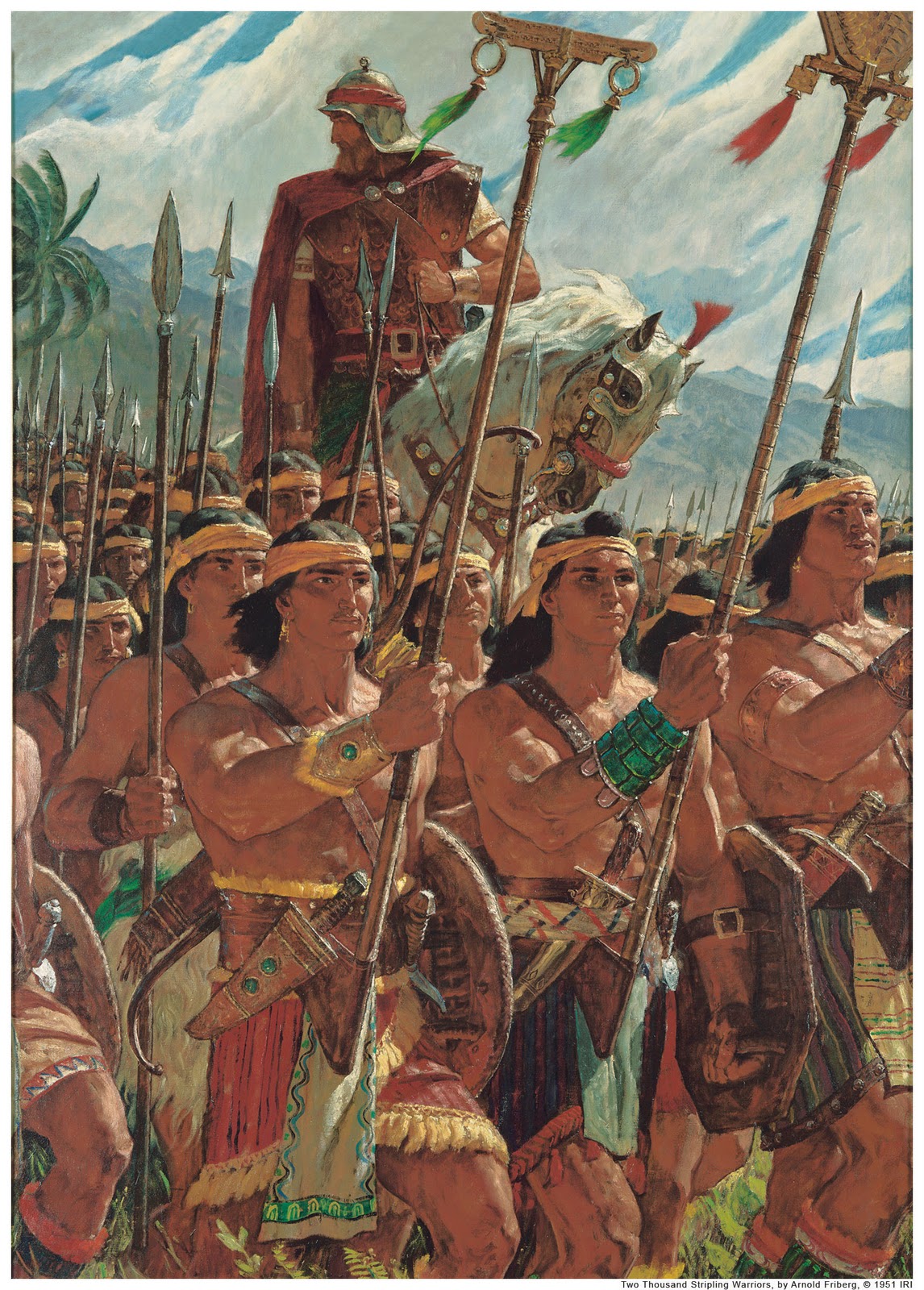
A Just God and 2,000 Stripling Warriors

A famous Book of Mormon story involves 2,000 "stripling warriors." These stripling warriors were young men whose parents had covenanted with God never to shed blood--so when their land was attacked, the parents could not defend themselves. These boys agreed to fight instead. The story is well-known because of its tribute to mothers: every single one of the 2,000 stripling warriors survived their major battle, even as their counterparts from neighboring towns--other believers in Christ--died around them, and these boys attributed their miraculous unanimous survival to the teachings of their mothers.

But what did their mothers teach them that the mothers of the other believers didn't?

The answer is in Alma 57:26:

26 And now, their preservation was astonishing to our whole army, yea, that they should be spared while there was a thousand of our brethren who were slain. And we do justly ascribe it to the miraculous power of God, because of their exceeding faith in that which they had been taught to believe—that there was a just God, and whosoever did not doubt, that they should be preserved by his marvelous power. 

There is a just God. Whosoever does not doubt, will be preserved by his marvelous power.

This doubtless faith saved the life of every single one of those 2,000 boys.

What a Having a Just God Means Today

Why is it important to have faith in a just God? Why does that matter?

Knowing there is a just God makes forgiveness easy.

It is easy to forgive when we have a knowledge of the justness of God, because we know that by forgiving a person of their sins against us, they are not off the hook. We can take comfort in knowing that even the most abhorrent of wrongs will be avenged in complete perfection by a perfectly just God; we do not have to worry about taking revenge ourselves.

We can let it go, because God does not let it go. That's why the Atonement has to come in.

At the same time, knowing that there is a just God helps us to understand that our unforgiveness counts as a sin against us, and that a just God will hold us accountable for the trespasses against us that we did not forgive. Faith in a just God is both a carrot and a stick when it comes to repentance and forgiveness. We can rejoice in the knowledge that those who have wronged us will eventually pay in the way God deems fit, and we can take a lot of motivation from the fact that we, too, will pay for the things we don't repent of and/or forgive.

When you know there is a just God, it is easy to turn burdens over to Him, because you can trust with 100% certainty that He will take care of it in the most ultimately fair way possible.


How do we build faith in a just God?

Where does faith come from? How can we develop the faith in God's justice that we need in order to fully heal?

Faith is a gift of the Spirit. The first thing to do in the search for faith is ask for it in prayer. Even if you're not sure God exists, the act of praying to Him in the name of Jesus Christ is an act of faith that will be rewarded.

Faith is a principle of action. This means that faith IS action, that action grows faith, that action and faith go hand in hand. If you want more faith, you have to ACT!

What kind of actions build faith in a just God?
- daily scripture reading exercises faith in the promise that searching God's word will bless our lives
- daily prayer exercises faith in the reality of God and His ability to answer prayer
- paying tithing exercises faith in God's ability to provide for us financially and temporally
Basically, what we used to call "the seminary answers" in my seminary class. Pray. Read your scriptures. Keep the commandments. These things build our faith in God. If we don't have enough faith to do the little things, we're not going to have enough faith to do the big things.

Forgiving someone who has truly, deeply hurt you is a big thing.

It takes a lot of faith.

 Do you know there is a just God? 

Did you grow your faith in Him today?

Growing Faith Every Day

I have been coming to the conclusion that one of the most important things we can do in life is commit to build our faith in a just God every day. Theoretically we make that commitment at baptism. It's part of enduring to the end. In order to endure the end, one's faith has to grow every day. Stagnant faith simply cannot survive. If faith doesn't grow, it dies instead.

So, here is a challenge.

You may have already committed to grow your faith every day; maybe you've committed and forgotten. Maybe you've never committed.

Maybe you don't even believe in faith.

I challenge you to grow your faith. And not just to grow it, but to work to grow it every day.

Take a "leap of faith." Do something that requires some courage and trust in God's work. Trust your intuitions today. Do something illogical that just feels right and see what happens.

Pay your tithing.

Read your scriptures.

Pray.

Grow your faith today. Make it a part of your life. Commit to grow that faith every single day.

If your faith isn't growing, it's dying.

Tuesday, May 13, 2014

God can heal instantly.

This is kind of an echo of another post on faith. But this experience has been floating around in my mind and I wanted to share it.

From here.
A few months back I experienced some trauma. This was after I developed the ability to discern traumas more clearly. I noticed at the time that one of my chakras had developed a dent and some discoloration as a result of my trauma. It looked kind of like this picture.

When the chakras are clean and healthy and everything, to me they appear as perfectly spherical and evenly bright all the way through. So dents, cracks, discolorations, and so on are not good.

Anyway, my hurt chakra distressed me. So I went into theta and got cleaning.

And got cleaning.

And got cleaning.

And I scrubbed that thing! And I tried so hard to clean it and make it perfectly round again! And it just wouldn't come clean!

And finally I did what I should have done in the first place: I prayed about it.

It came to me that, theoretically, at least, Heavenly Father should be able to just fix it. Just fix it instantly. Right? Why not?

So tentatively, I asked if He would just clean it and fix it and make it beautiful and clean and bright, please.

And He did. So fast. In the blink of an eye, this dented, yucky ball I'd been mentally scrubbing for weeks just perfected. Clean, whole, bright. Perfect. It was amazing. I was so grateful.

It taught me a lot. God can always heal instantly, if we are ready for it, if we ask for it, and if we have faith for His healing to come through for us. Healing on our own doesn't always work and it's rarely the optimal solution. If I had kept thinking I was going to clean my traumatized subtle body on my own, I am pretty sure I'd still be spiritually dented. But as soon as I turned it over to Heavenly Father, BAM. Things were good. Instantly.

To me, it all comes down to faith. Do we have faith to be healed?

James A. Cullimore.
From James A. Cullimore:
I bear my solemn witness that these gifts are with the Church today. The sick are healed, the eyes of the blind are opened, the ears of the deaf are unstopped, the lame are made to walk. The gift of tongues blesses our missionaries and others the world over. The gifts of wisdom and knowledge are evidenced by the leadership of our people everywhere. Devils are cast out, spirits are discerned, the gift of faith is demonstrated on every side. Many mighty miracles give evidence that this is indeed his church, the church of Jesus Christ. All the gifts and powers and blessings that have always identified Christ’s church are with the Church today.
As members of the Church, is our faith sufficiently strong? Are we in tune with the Spirit that we might be blessed by these great gifts? Do we believe a miracle can be performed or a blessing given? Do we call upon the priesthood as often as we should to administer to the sick? Do we believe we can be healed? Do we have faith to heal? Is the priesthood always prepared to give a blessing? How strong is your faith?

Monday, May 12, 2014

healing ethics, and healing those without faith to be healed

A good, good question from the amazing guy behind DouglasErnstBlog! :o)
I know this is a weird question, but say you had a friend who did not have faith, but you wanted to help them with "problem x." Say they had back pain and you found they had all sorts of trapped emotions that were causing it. Would it be unethical to "release" those emotions, and would it even do any good (i.e., they would just build up again because the person wasn't confronting the issues that manifested the emotions to begin with).

Sometimes people with zero faith come into my life, and I wonder if my purpose it to try and reach them somehow. However, it just seems like we're on two completely different planes of existence. Nothing I say or do seems to make a dent in their "religion of non-faith" (or whatever you want to call it).

I've actually started blogging about this multiple times and just haven't finished that particular essay. 

Choose the right! Agency, yeah! From lds.org.
Here is my experience with it, greatly abridged.

Agency

It all comes down to agency. The power to choose. As children of God, we all have the power to choose. A healing can only work if a person chooses it to apply to them. If you do a healing that a person isn't aware of, in my experience, it doesn't go through. I did this a few times in the beginning of my healing journey--doing well-meant remote work for people who were having a hard time who I felt could benefit from some extra help.

It didn't help.

I learned that a lot of it is because of agency, and the rest of it is like the question pointed out--it's our choices, so many times, that lead to our current circumstances.

For example, in recent weeks I saw a friend fall under the influence of drugs. When you use drugs, in my personal observation, you open yourself up to unclean spirits. I saw two of them enter this friend's space. I meant well, but ignorantly commanded the bad guys to go, not understanding the reality of the situation.

The reality was this: My friend still had agency, and she wasn't asking them to go. She was actively inviting them in. I could make them leave for a moment, but they were welcome to come right on back and help ruin her life from the inside out.

It's the same thing with other healing work. You can do this or that for a person, and maybe it might stick, or maybe not, but in the end it all comes down to their agency and if they are spiritually prepared to accept such a healing. This preparedness can be conscious or subconscious, but it has to be there.

In my research I came across a scripture, D&C 24:14, which includes the admonition: "And these things ye shall not do, except it be required of you by them who desire it." It is in reference to the use of spiritual gifts of healing (among other gifts). To me, this means that I can offer to help someone, but if they don't want something done, then there we go. I'm not supposed to help them. It is the most important thing to never violate agency. 

Parallels with the Atonement

The whole thing has made me understand the Atonement much more deeply. We've probably all seen the pictures of Jesus knocking on the door with no doorknob. It has no doorknob because He can't let himself in. Only you can let Him in. Jesus already did all the remote healing we will ever need. ALL of it. So why do we still suffer?

Why do we still ache?

Why do we still hurt so much? Spiritually, physically, mentally, emotionally?

Jesus did all the suffering for us, but we still need to accept it. His healing energy is in us--I believe it is literally in every atom--fodder for another post--but clearly we are not all 100% whole and healed. This healing energy is in our queues, waiting for us to access it.

It's the same thing with healing work. You can certainly do well-meant healing work for someone who isn't ready for it. I've done it plenty (before I knew what I know now)! But don't be surprised if you see no effects. C. S. Lewis has a great quote out there about how it is the goal of Christianity for us all to become "little Christs." I love the hymn Lord, I Would Follow Thee for its line: "I would learn the healer's art." As Christians we are called upon to wreak miracles of healing in all its forms: physical, mental, emotional, spiritual--we are called upon to share the healing miracle of the Atonement with our brothers and sisters in Christ.

But just because we do the work doesn't mean they will accept it. When we preach, plenty of people don't listen. When we do thoughtful things, sometimes our efforts go unnoticed or even reviled. But we are willing to do the work!

Ethics

The book The Emotion Code has a great section on ethics. Basically, it comes own to: it's an invasion and violation of privacy for a person to assume another person's energy system without their knowledge and permission (as would be the case in remote theta work, or Emotion Code work). So if your work is going to involve you muscle testing on another person's behalf, you should not do that without their permission! That would be an abuse of the ability. This is because when you assume a person's energy as a proxy, you can learn things about them that they may not want you to know.

Of course, when you start using your spiritual eyes, you start seeing all sorts of things about people they may prefer you not to know! But that's not intentional--intentionally assuming a person's energy without permission is a whole other thing. It's the difference between overhearing a person talking about their life story while you happen to be in the area, and sneaking into their room to read their diary.

As long as you're not assuming their energy, I believe remote work is fair game. I send "good vibes" to people without their permission. It's fancy prayer and doesn't violate their agency. But I don't do theta or belief work without permission.

Basically, if you would say it in a "normal" prayer, I believe it's something that you can do without permission. For example, since I was a kid I have always prayed for people to have good days. It's not unethical to pray for someone to have a nice day. Similarly, it's not unethical to consciously send people you pray for beams of unconditional love, or whatever kind of healing you do. But it would be unethical to go into a theta state and alter their perceptions of the world without their permission. Also, I don't think it would work (although I haven't tried, and won't, so I can't say for sure).

So: would it be unethical to release a person's emotions behind their back and would it even work? Yes,
it would be unethical, and I don't know if it would even work. But let's not find out.

Reaching out to those without faith
Sometimes people with zero faith come into my life, and I wonder if my purpose it to try and reach them somehow. However, it just seems like we're on two completely different planes of existence. Nothing I say or do seems to make a dent in their "religion of non-faith" (or whatever you want to call it).
Just the other day I had this trial where I was dealing with some serious stuff, and no one would take it seriously. We were on "two completely different planes of existence," even though the people I asked to help me technically shared all the same beliefs as me!

I called my aunt for advice and she stated that as those who can see clearly, we have a job to bring matters of the spirit to the attention of those who do not see.

That does not make it easy!

I believe this falls under the category of--follow the Spirit. Follow your intuitions. You won't go wrong if you follow the promptings of the Holy Spirit. Even if things look bad in the short term. You can always trust God. So if you know how to discern His voice from all the other voices, just do that and follow it 100%.

The other day, when no one would listen, I was at first discouraged and worried. But I decided to just turn to God 100%, and He heard my prayers. And the way He took care of the problem answered not just my prayer, but the prayer of the person who had asked me to help. And that person's prayer had been prayed years before.

From here. Leap of faith!
It turned out that it was a beautiful thing that no one around me was a believer, because in the end, I and the person I helped witnessed an incredible miracle that would not have been possible if we had not had to exercise such faith in God. But because no one else would help, out of necessity we turned to Him completely, and it was beautiful.

The difference between believers and non-believers is vast. There is a gulf between the faithful and the faithless, in every religion and belief system. I believe we just have to trust that at the right time, those who need us will find us! And that we will find the people who are ready for our help! And that as we are good examples of Christlike love and healing, those who doubt will eventually come around. And even if they don't, like I learned the other day--God has miracles in store for those who believe and call on His name. It doesn't matter if your neighbors believe. Your faith is the important thing.

Thanks to Doug for the good question! I need to finish all my other posts on this topic... because I've started a bunch! Haha!

Sunday, May 4, 2014

the only limit is our faith!

I moderate my ward's blog, and this morning I had the opportunity to post this blog entry about faith. This post struck me so deeply. Go read it now.

The point of that post was: God still speaks to us. He speaks to us like He spoke to the people in the holy scriptures.

And the only limit of His power is the limit we place on it.

In other words, the only limit of God's power in our lives is the limit of our faith.

***
Buy it here.
I was recently introduced to the book The Emotion Code, which is amazing. The theory is that--okay. So every time you feel an emotion, it's because of a chemical reaction in your brain. Well, if your brain is overloaded on those emotion chemicals, it can stop them from processing. But then they just get lodged in your body instead. And they become your default emotions--for example, if you had a lot of sadness emotions stored up in you that your brain decided against processing, any time something sad came up in your life, it would make you REALLY SAD.

Or if you had a lot of anger molecules that weren't getting processed, whenever something that could possibly make someone angry happened to you, you would get REALLY ANGRY. It's the body's way of trying to metabolize these leftover molecules of emotion, if you will.

That's the theory. The book also explains a lot more about it and how to release these trapped emotions. Go read it and try it. Or come to me and have me test it out on you. It's pretty fun.

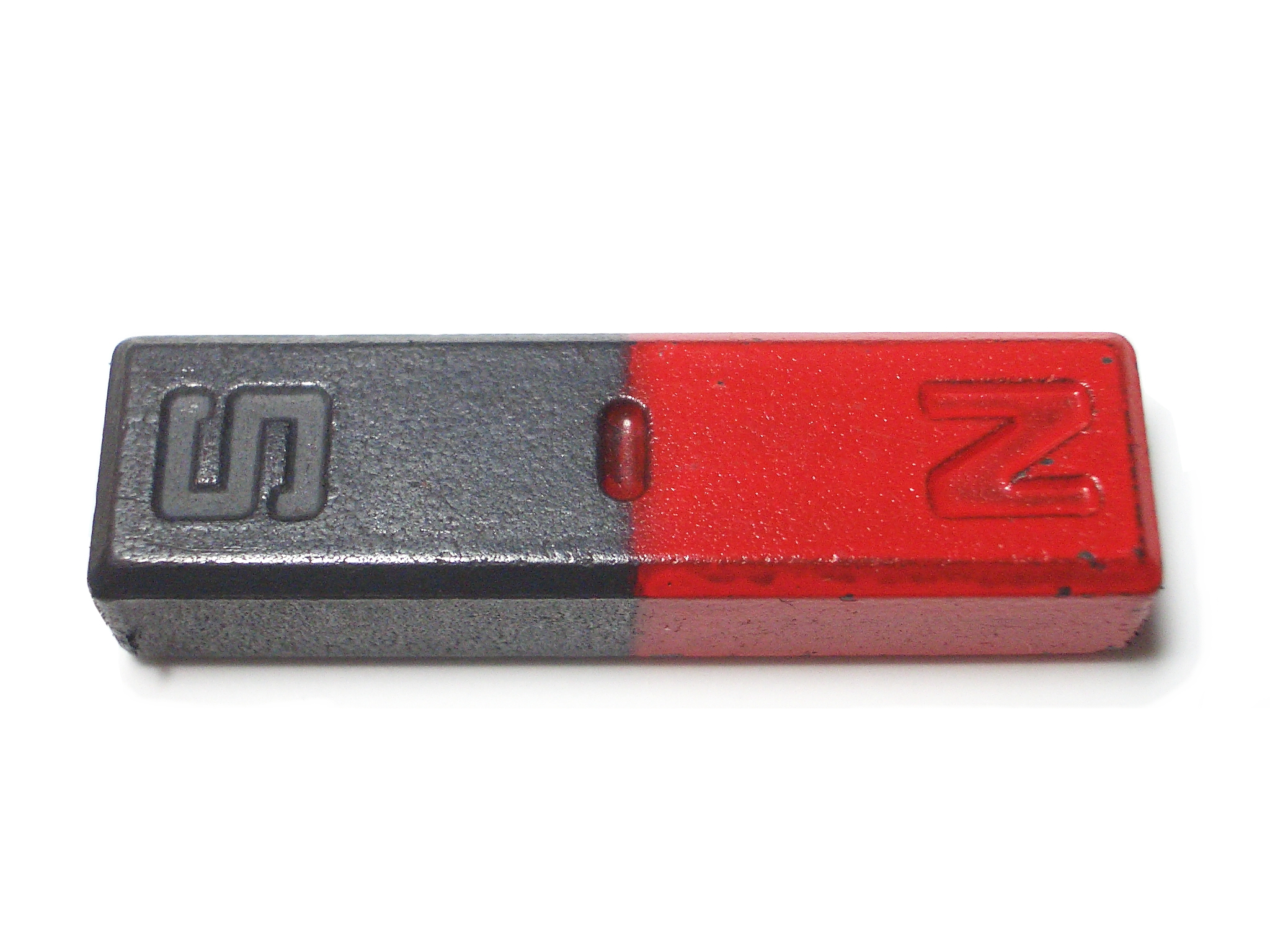
The Emotion Code protocol calls for the use of a magnet--to magnify the intention of the practitioner. That seemed kind of silly to me, although I used it at first. But a few days after I started practicing the modality, I was stuck in the car for 6+ hours, and I decided I wanted to try releasing some trapped emotions from myself. And I had no magnet.

I prayed, and learned that the magnet was nothing more than a tool to magnify faith. I didn't need a magnet as long as I had the faith. So at first I used a pen instead, since that's what I had.

And then I just used nothing--just imagined using a magnet in my mind.

And then I just prayed. And it all worked the same.

Using The Emotion Code, you're supposed to identify all the trapped emotions causing your physical problems. Well, one friend I was working on for weight loss issues turned out to have a few trapped emotions causing her excess weight... 750 trapped emotions, to be precise! I knew I'd have a lot of work ahead of me to release them all, one at a time, after identification.

So I started a spreadsheet and started with #1, working my way down the list. After identifying like 40 emotions I was pretty burnt out from that.

It occurred to me to ask--can I just release all the emotions that are ready to be released at this time?

And the answer was yes.

So I did.

And I didn't need a magnet, or even a pen. All I needed was faith that if I commanded them to release now, they would. And just like that, those trapped emotions were processing.

But it gets better than that.

I realized that I--and she--were both processing all sorts of other trapped emotions. I asked if I could just release them all en masse. And I got the answer of yes.

So I just did.

Because in the end, all it is is FAITH.

 ***

A few weeks ago, I was reading up on things, and I found this article there about the nature of our common Enemy. And I quote:
 These spirits also have other tools they use on us and in us… fiery darts, chains, flaxen cords, spiritual shunts, curses, etc. They aren’t metaphors; they are energetic weapons that get lodged in your energy field. Energy healers see/deal with these all the time. I was shocked the first time I found one. It was an energetic knife in my uterus, and it caused a miscarriage, as well as other pain. It is good to learn how to discern these too and learn how to cast them out so they don’t drain your energy either.
I read that, and I instantly knew in my heart: I had a friend with a weapon of this variety lodged in his side. I could discern it so clearly.
Fiery darts of the wicked. From here.

And I despaired. Because I thought--what does it take to dislodge an energetic weapon? Once it's gone, then what? Do you have to like, sew up the rift in the energetic field? What is this?

I emailed the blogger and she kindly responded: it is so easy. All you need to do is ask God in the name of Jesus Christ, nothing doubting, and it'll be gone.

And you know what? It was that easy. I just decided to believe 100% that when I asked these weapons to be gone, they would be.

And they were.

***
Tonight I had an experience where I faced a serious, serious problem and didn't know how to handle it. I sought advice, but it all came down to I needed extra help, and no mortal person would help me. I reached out to everyone I could think of to help me solve this problem, and no one would.

But then I remembered: FAITH!

I knew God had another answer, one that didn't rely on the people around me. And He did. And He showed me how to access that answer, and I did, and it was beautiful.

Someone's soul was healed tonight.

Thanks to faith.
 10 Behold it was by faith that they of old were acalled after the holy order of God.
 11 Wherefore, by faith was the law of Moses given. But in the agift of his Son hath God prepared a more bexcellent way; and it is by faith that it hath been fulfilled.
 12 For if there be no afaith among the children of men God can do no bmiracle among them; wherefore, he showed not himself until after their faith.
 13 Behold, it was the faith of Alma and Amulek that caused the aprison to tumble to the earth.
 14 Behold, it was the faith of Nephi and Lehi that wrought the achange upon the Lamanites, that they were baptized with fire and with the bHoly Ghost.
 15 Behold, it was the faith of aAmmon and his brethren which bwrought so great a miracle among the Lamanites.
16 Yea, and even all they who wrought amiracles wrought them by bfaith, even those who were before Christ and also those who were after.
 17 And it was by faith that the three disciples obtained a promise that they should anot taste of death; and they obtained not the promise until after their faith.
 18 And neither at any time hath any wrought miracles until after their faith; wherefore they first believed in the Son of God.
 19 And there were many whose faith was so exceedingly strong, even abefore Christ came, who could not be kept from within the bveil, but truly saw with their eyes the things which they had beheld with an eye of faith, and they were glad.
- Ether 12:10-19 

I am so glad. 

Believe.

Witness miracles.